
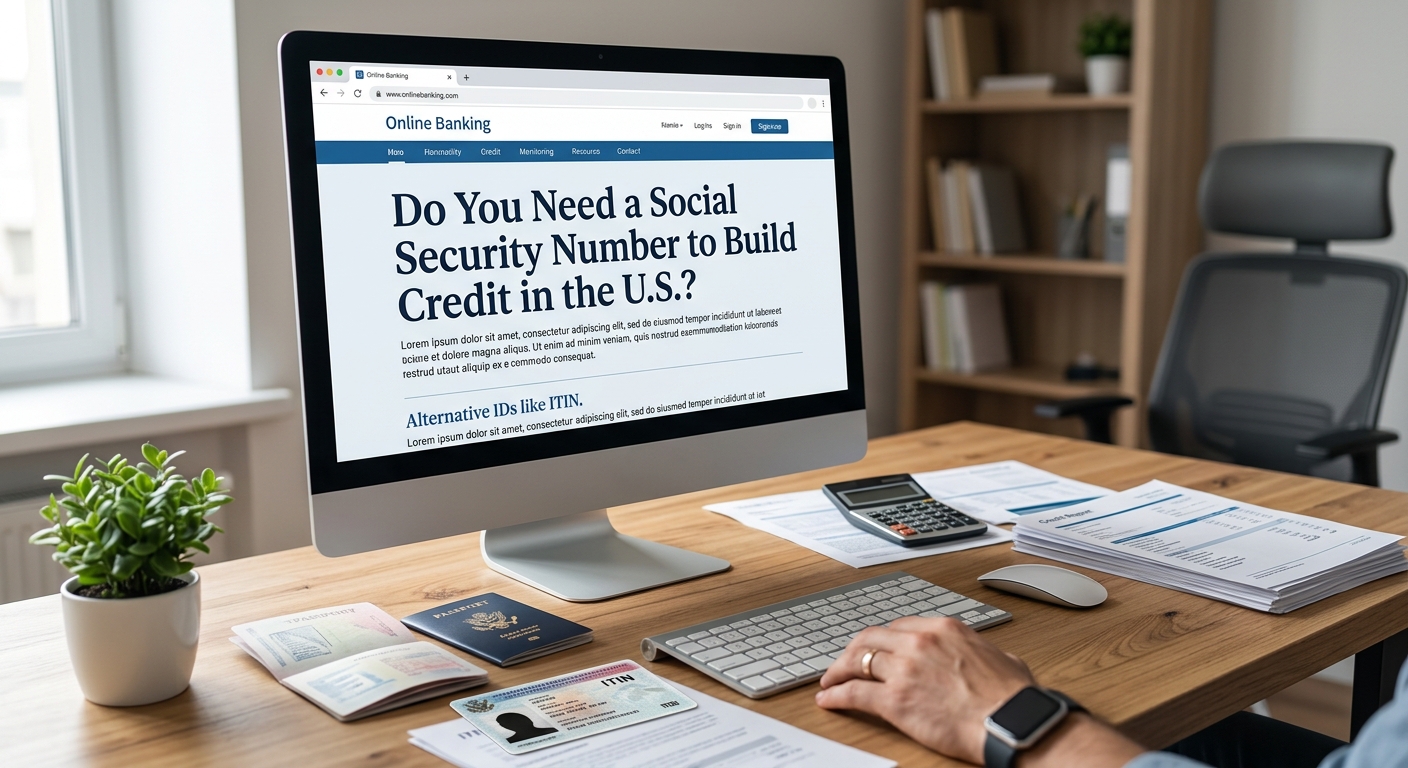
Do You Need a Social Security Number to Build Credit in the U.S.?
Short answer: no, not strictly. But it’s the default path almost everything in the U.S. credit system is built around. So, not having one changes which doors are open to you — not whether any doors are open at all.
Do You Need a Social Security Number to Build Credit? Why an SSN Is the Default
Credit bureaus and lenders need a reliable way to match your accounts and payment history to you specifically, consistently, over time. A Social Security Number has functioned as that identifier for most of the U.S. financial system’s history. That’s why the large majority of credit card and loan applications ask for one as a standard field. That’s a practical default built into how most issuers’ systems work — not a law that says credit is unavailable without one.
Because of that default, someone without an SSN will find that most mainstream, mass-market credit cards simply aren’t built to process their application at all. That’s not because they’re ineligible in principle. Instead, it’s because the online form has nowhere to put their information.
The Main Alternative: An ITIN
An Individual Taxpayer Identification Number (ITIN) is issued by the IRS to people who need to file U.S. taxes but aren’t eligible for an SSN. A growing number of banks and credit card issuers accept an ITIN in place of an SSN when you apply. Several of them are designed specifically to serve immigrants and newcomers. This is the most common practical path for someone without an SSN to open a credit-building account in their own name.
The specifics of which issuers accept an ITIN, what documentation they require, and which cards work best for this situation change fairly often. Products enter and leave the market constantly. So we cover that in detail separately, in our guide to building credit with an ITIN, rather than repeating a card-by-card list here.
Other Ways to Build Credit Without a Social Security Number
Becoming an authorized user. If someone with a well-managed credit card in the U.S. adds you as an authorized user, their account’s history can begin appearing on your file. Requirements for authorized users vary by issuer. Still, some ask for basic identifying information for the authorized user, which can be more flexible than a full primary applicant application. This path depends entirely on having someone willing to add you, and on their account staying in good standing.
Some fintech and credit-builder products. A handful of newer credit-building tools have been designed specifically around serving people without a traditional SSN, sometimes verifying identity through alternative documentation. Availability and requirements shift over time. So it’s worth checking current options directly, rather than assuming any specific product still works the same way it did last year.
What Doesn’t Work, Even Without an SSN Requirement
Prepaid and debit cards. These never require an SSN in the way credit products do. But they also never build credit, regardless of how responsibly you use them. That’s because they aren’t reported to the credit bureaus at all — there’s no credit being extended.
«No credit check» cash advance or payday-style products. These sometimes market themselves loosely around credit-building language. But many don’t report to the major bureaus either. That means using them doesn’t build the credit history you’re trying to establish. Confirm bureau reporting directly before assuming any product is helping.
If You Get an SSN Later, Does Your Credit History Transfer?
This is a common and reasonable question. If you’ve been building credit under an ITIN and later become eligible for an SSN, there isn’t an automatic, guaranteed transfer of your history. It doesn’t move from one identifier to the other on its own. That’s because credit bureaus match records primarily through the identifying number used when the account was opened. In practice, many people in this situation contact the bureaus and their creditors directly, to request that accounts be updated to reflect the new number. That can help preserve continuity. But outcomes vary by bureau and by lender. It’s worth handling proactively rather than assuming it happens automatically.
Frequently Asked Questions
Is it illegal to build credit without a Social Security Number? No. Building credit using an ITIN or another accepted form of identification is a normal, legitimate path used by many people in the U.S. It isn’t a workaround of any law — it’s simply a different identifier accepted by certain issuers.
Will lenders know if I’m using an ITIN instead of an SSN? Yes — the application itself will ask which type of number you’re providing, and your credit file will reflect the identifier used to open each account.
Can I get a credit card with no number at all — no SSN and no ITIN? It’s extremely limited. Nearly every credit-building product in the U.S. requires at least one of these two identifiers. That’s because they’re what credit bureaus use to build and match a file to a specific person.
Does using an ITIN affect my credit score negatively? No. Scoring models evaluate your payment history, utilization, and other account behavior — they don’t penalize you for which identifying number was used to open the account.
This article is for informational purposes only and is not financial or immigration advice. Requirements for ITIN eligibility, and for opening financial accounts with one, are set by the IRS and by individual financial institutions and can change — confirm current requirements directly with the IRS and with any issuer before applying.