
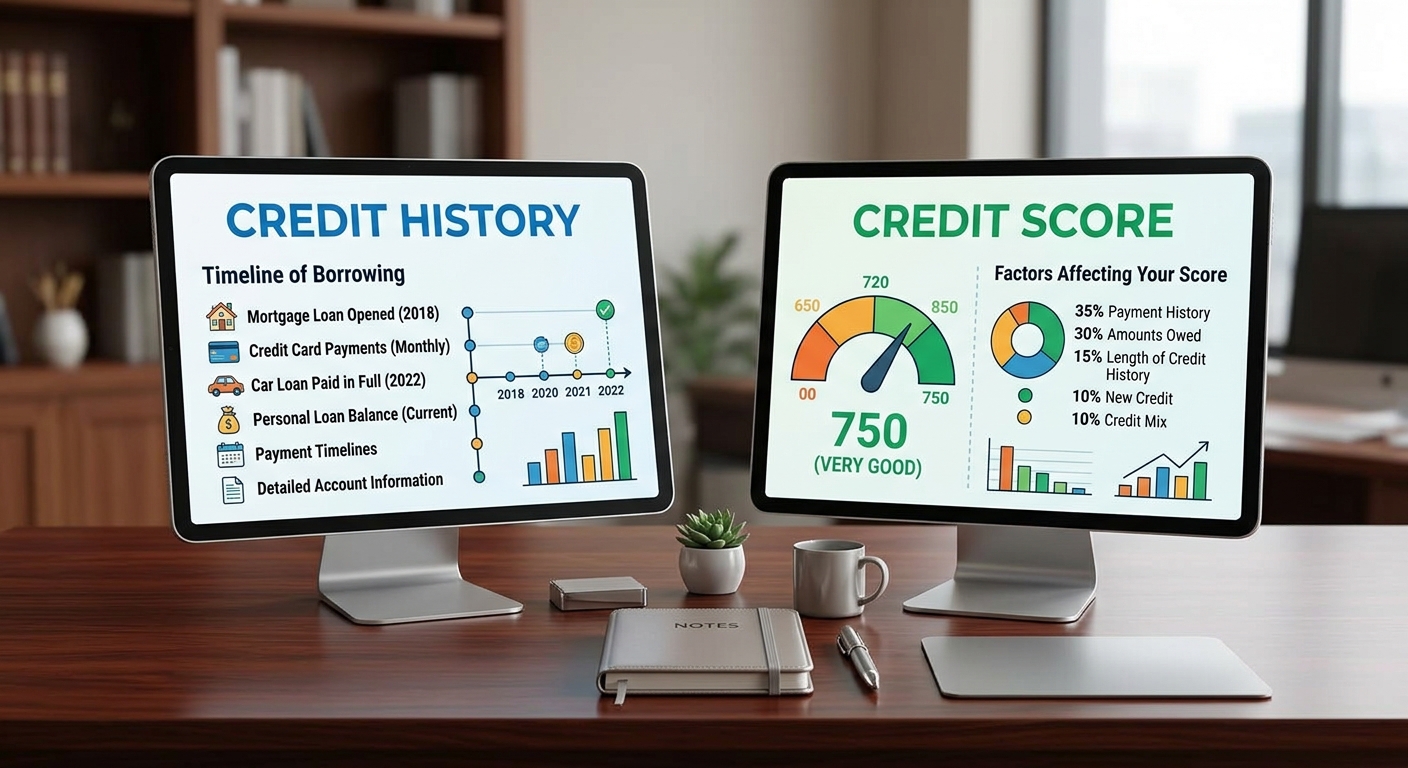
What Is a Credit Report and How Do You Read One?
Most people know they have a credit score, but far fewer have actually opened their credit report and read it. That’s worth fixing. Your report is the source document your score is calculated from. It’s also the only place you’ll catch an error, a fraudulent account, or outdated information, before it costs you an approval.
How to Get Your Report for Free
By federal law, you’re entitled to a free copy of your credit report from each of the three bureaus: Equifax, Experian, and TransUnion. AnnualCreditReport.com is the only site authorized to provide these federally mandated free reports. So that’s worth remembering specifically. Because a number of lookalike sites use similar names and language to sell you something you’re actually entitled to for free.
Your credit report and your credit score are requested separately, in most cases. Getting your free report through AnnualCreditReport.com doesn’t automatically show you a score, though some versions now include one. For the score itself, a bank or credit card app that shows a free score is usually the simplest route.
The Five Sections of a Credit Report
Every credit report is organized roughly the same way, regardless of which bureau issued it.
1. Personal and Identifying Information
Your name (and any variations or former names on file), current and past addresses, date of birth, and sometimes employer information reported by past creditors. This section doesn’t affect your score at all. But it’s worth checking carefully anyway. An address or name you don’t recognize here can be an early sign that someone else’s information has been mixed into your file. Or worse, it can be a sign of identity theft.
2. Accounts (Also Called «Tradelines»)
This is the core of the report, and the part most people actually mean when they picture «my credit history.» Each account listed shows:
- The creditor’s name and account type (credit card, auto loan, student loan, etc.)
- The date the account was opened
- Your credit limit (for revolving accounts) or original loan amount (for installment accounts)
- Your current balance
- Your account status — open, closed, paid, in collections, or charged off
- A month-by-month payment history grid, usually going back up to 24 months or more, showing whether each payment was on time or how late it was
That payment history grid is worth learning to read on sight. It’s typically a row of small marks, one per month. Usually, that’s shown as «OK» or a checkmark for on-time payments, and a number (30, 60, 90, 120+) for how many days late a missed payment was. A long unbroken row of «OK» marks is exactly the pattern scoring models reward most.
3. Credit Inquiries
This section lists everyone who has requested your report, split into two types:
- Hard inquiries — created when you apply for new credit and a lender checks your file as part of that decision. These can affect your score slightly, and typically stay listed for about two years. However, their impact fades faster than that — usually within about 12 months.
- Soft inquiries — created when you check your own report, when a company checks it for a pre-approved offer, or when an existing creditor reviews your account periodically. These are visible only to you and never affect your score.
If you see a hard inquiry you don’t recognize, that’s worth investigating immediately. It can be an early sign someone applied for credit in your name.
4. Public Records and Collections
This section covers more serious negative items: accounts sent to third-party collections, and in some cases, public record information like bankruptcies. (Civil judgments and tax liens were removed from credit reports industry-wide several years ago. So you generally won’t see those here anymore, though bankruptcy filings still appear.) Collections and bankruptcies carry significant weight against your score. They typically stay on your report for 7 years — up to 10 for Chapter 7 bankruptcy — from the date of the original missed payment. That’s not from when the account is eventually paid or resolved.
5. Consumer Statements (Less Common)
Some reports include a section where you can add a short personal statement — for example, explaining that a specific account was affected by identity theft or a dispute. This doesn’t change your score, but it can give a human reviewer context if they read your full file.
Why Your Three Bureau Reports Can Look Different
Not every creditor reports to all three bureaus — some report to only one or two. That means your Equifax, Experian, and TransUnion reports can genuinely differ. An account might appear on one and not the others. Or a balance update might post to one bureau a few days before another. This is normal. Still, it’s one of the reasons it’s worth checking all three periodically, rather than assuming one report speaks for all of them.
What to Check for When You Read Yours
Go through each section specifically looking for:
- Accounts you don’t recognize. This is the most important thing to catch quickly — it can indicate identity theft or a simple mix-up with someone who has a similar name.
- Incorrect balances or limits. A reporting error here can distort your utilization calculation, which affects your score directly.
- Late payments you don’t believe happened, or that are older than they should be. Negative marks are only supposed to remain for a set number of years — anything past that window should have dropped off.
- Duplicate accounts. Occasionally the same debt gets listed twice, sometimes once under the original creditor and again under a collections agency — this can make your history look worse than it is.
- Closed accounts marked incorrectly. An account you paid off and closed voluntarily should show that status accurately, not as if it were closed by the lender.
What to Do If You Find an Error
If something on your report looks wrong, you can dispute it directly with the bureau that’s reporting it, either online or in writing. Each bureau is required to investigate and respond, typically within 30 days. Keep records of what you disputed and any documentation you submit. This is a formal process with a paper trail, not just a customer service request.
Frequently Asked Questions
Is checking my own credit report the same as checking my score? No. Your report is the underlying record of your accounts; your score is a separate number calculated from that data. You can check your report without seeing a score, and vice versa.
Does checking my own report hurt my score? No. When you check your own report or score, it’s recorded as a soft inquiry, which is never visible to lenders and never affects your score.
How often should I check my credit report? Checking all three bureau reports at least once a year is a reasonable baseline. More often works too — many free monitoring tools update weekly or monthly — if you want to catch errors or fraud quickly.
Why does my report show an account I already paid off years ago? Paid, closed accounts in good standing typically remain on your report for up to 10 years. They continue to count toward your account age during that time. So this is expected, and it generally helps your history rather than hurting it.
This article is for informational purposes only and is not financial advice. Report formats and available features can vary slightly by bureau — always review your actual report directly through AnnualCreditReport.com or the issuing bureau for the most accurate information.