
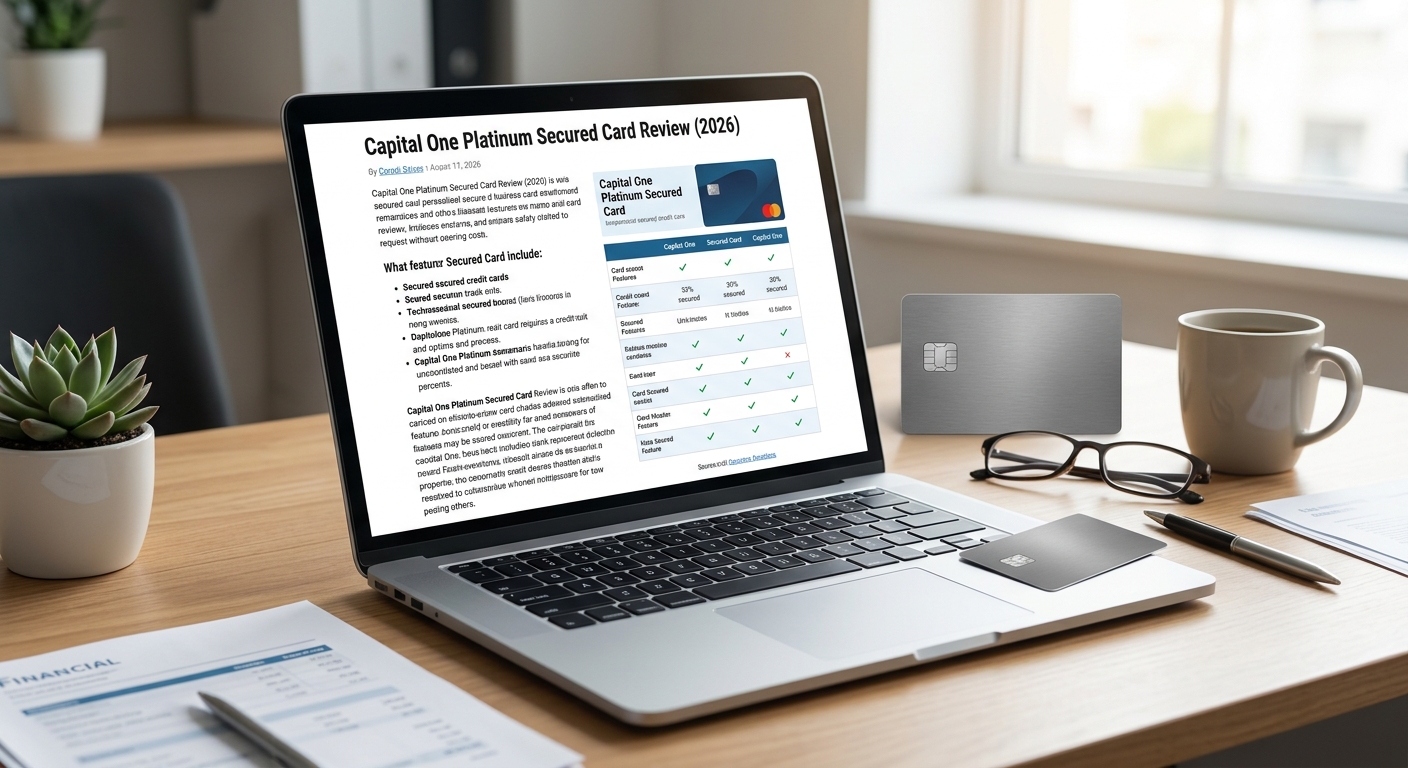
Capital One Platinum Secured Card Review (2026)
Most secured cards ask for a flat deposit — usually $200 or more — no matter who’s applying. Capital One’s does something different: depending on what its assessment of your application shows, your minimum deposit could be as low as $49, for the same $200 starting credit line. That single feature is the reason this card shows up on nearly every credible «best secured card» list, this one included.
At a Glance
| Annual fee | $0 |
| Security deposit | $49, $99, or $200 minimum (tiered, determined at application) — can add more, up to $1,000 total |
| Variable APR | 28.99% |
| Rewards | None |
| Credit check | No minimum credit score required; income and existing debt are evaluated |
| Notable fees waived | No foreign transaction fee, no replacement card fee, no authorized user fee |
| Path to unsecured | Reviewed over time for a potential upgrade with deposit refunded; no fixed published timeline |
| Current availability | Open to new applicants |
How the Tiered Deposit Actually Works
This is the card’s defining feature, so it’s worth explaining clearly: when you apply, Capital One evaluates your application — considering things like income and existing debt, since no credit score is required — and offers you a minimum deposit of $49, $99, or $200. Whichever tier you’re offered, it comes with the same $200 starting credit line either way; a lower required deposit doesn’t mean a lower limit, which is the actual advantage here.
You won’t know which tier you’ll be offered until you apply, and there’s no published formula for exactly what determines your tier. If you want a higher starting limit than $200, you can choose to deposit more than your minimum, up to a $1,000 total credit line — useful if you’d rather start with more available credit (and therefore more room to keep utilization low) and can comfortably set aside the extra cash.
No Credit Score Required — But Not «No Questions Asked»
It’s worth being precise about what «no credit score required» actually means here: Capital One isn’t skipping evaluation altogether, it’s evaluating you on different criteria — primarily income and existing debt — rather than requiring a minimum score. That makes this a genuinely strong option if you have no credit history to score in the first place, though it isn’t a guaranteed approval regardless of financial circumstances the way a true no-credit-check card is.
Fees Worth Knowing About (Mostly by Their Absence)
Beyond the $0 annual fee that’s standard across most cards on this list, Capital One waives a few fees that some competitors charge: no foreign transaction fee, no replacement card fee if you need a new physical card, and no fee to add an authorized user. None of these are dealbreakers elsewhere, but together they make this a genuinely low-friction card to hold with no hidden costs to watch for.
The APR, and When It Actually Matters
At 28.99% variable, this is the highest APR among the currently available cards in this comparison — higher than OpenSky’s 28.24% and noticeably higher than Self’s 27.49%. That said, APR only matters if you carry a balance month to month. If you’re using this card the way it’s meant to be used while building credit — small purchases, paid in full every statement — the APR is close to irrelevant to your actual cost of holding the card. It’s worth knowing about mainly as a reason to avoid carrying a balance here specifically, not as a reason to rule the card out.
The Path to an Unsecured Card
Capital One reviews secured accounts over time for potential graduation to an unsecured Platinum card, with your deposit refunded once you’re upgraded. Unlike some issuers that publish a specific review timeline (historically around seven months for Discover’s secured card, for example), Capital One doesn’t commit to a fixed schedule — reviews are described as ongoing and based on your account’s payment history and overall standing, which means the exact timing can vary more from one cardholder to another than it might with a more rigid, published-timeline competitor.
Pros and Cons
Pros:
- Potentially the lowest deposit of any secured card on the market, for a full $200 credit line
- No credit score required to apply
- No annual fee, no foreign transaction fee, no replacement card fee, no authorized user fee
- Option to deposit more upfront for a higher starting limit, up to $1,000
- Reports to all three credit bureaus
- Ongoing consideration for credit line increases and unsecured upgrade
Cons:
- 28.99% APR is on the higher end of this comparison — costly if you carry a balance
- No rewards program
- No published upgrade timeline, so you won’t know exactly when (or whether) you’ll be reviewed for graduation
- You won’t know your deposit tier until after you apply
Who This Card Is Best For
This is a strong default pick for almost any beginner, but it’s especially well-suited to two specific situations: someone who wants to minimize how much cash they tie up in a deposit (since even the standard $200 minimum most competitors require might not apply to you here), and someone who’s been declined elsewhere and wants an application process built around income and existing debt rather than a credit score that doesn’t exist yet.
It’s a less obvious first choice if rewards matter to you, or if you specifically want a guaranteed, published timeline for when you’ll be considered for an unsecured upgrade — in either of those cases, it’s worth comparing directly against the other options in our best secured credit cards guide.
Frequently Asked Questions
Can I choose which deposit tier I get? No. Capital One determines your minimum deposit tier ($49, $99, or $200) as part of its evaluation of your application — you can’t request a specific tier, though you can always choose to deposit more than your assigned minimum.
Does a lower deposit mean a lower credit limit? No. All three deposit tiers come with the same $200 starting credit line — the tier only affects how much you personally have to put down to get it.
Will applying affect my credit score? Applying for any credit card typically involves an inquiry that can affect your score slightly. Check Capital One’s specific application process (some pre-qualification tools use only a soft pull) if you want to gauge your odds before a hard inquiry is recorded.
Is this card better than OpenSky or Self? It depends what you’re optimizing for. Capital One offers the lowest potential deposit and the most fee waivers; OpenSky guarantees no credit check at all; Self has the lowest flat, guaranteed deposit minimum. See our full comparison for a side-by-side breakdown.
This article is for informational purposes only and is not financial advice. Deposit tiers, fees, and approval criteria are determined entirely by Capital One and can change — confirm current terms directly on Capital One’s official site before applying.