
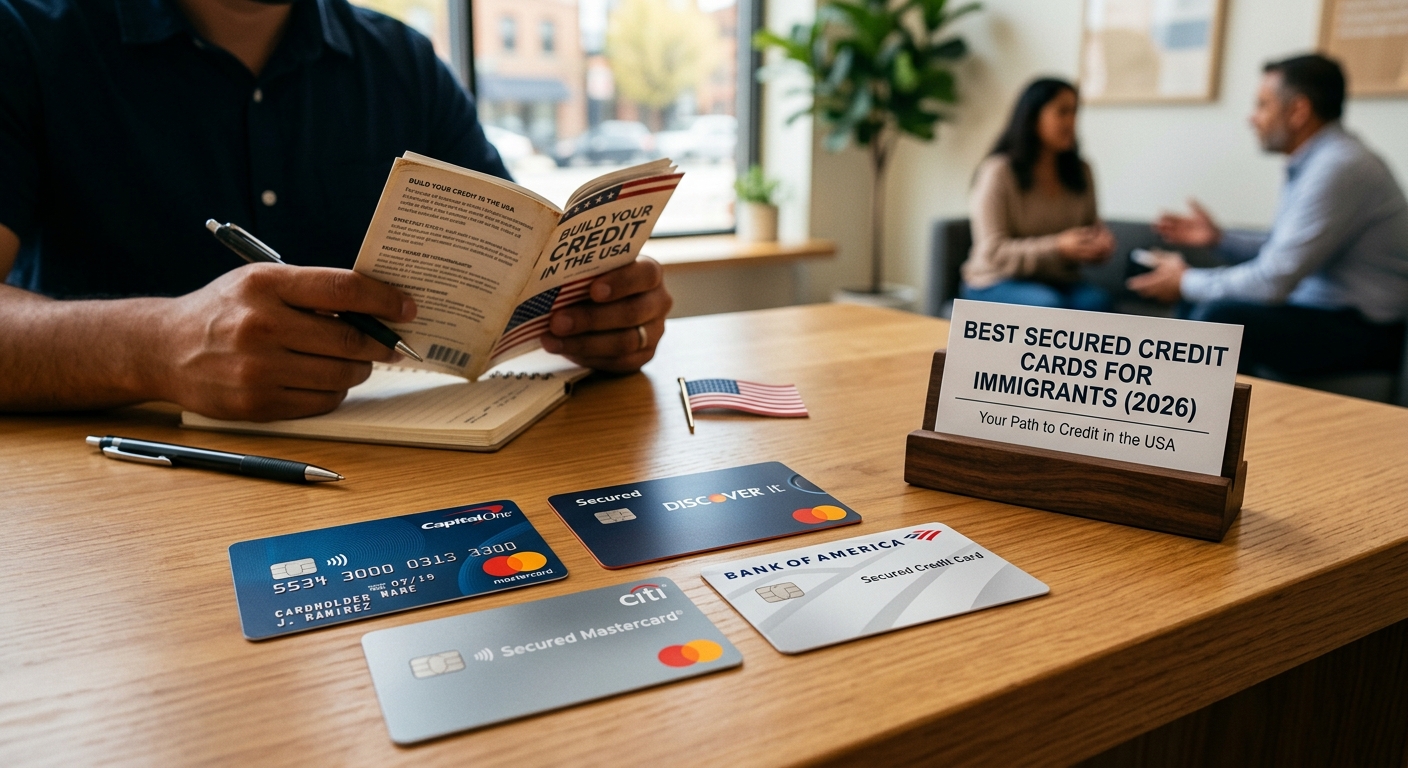
Best Secured Credit Cards for Immigrants (2026)
A lot of “credit cards for ITIN holders” lists floating around online are quietly out of date — two of the cards commonly recommended on other sites have actually been discontinued. Here’s what’s genuinely available right now, verified directly rather than copied from an older list.
What “ITIN” Means, Briefly
An Individual Taxpayer Identification Number (ITIN) is issued by the IRS to people who need to file U.S. taxes but aren’t eligible for a Social Security Number. A number of card issuers accept an ITIN in place of an SSN on a credit application — this article covers which of the secured cards already reviewed on this site actually do.
A Warning About Outdated Lists
If you’ve searched for this before, you may have seen the Citi Secured Mastercard and the Wells Fargo Secured Credit Card recommended as ITIN-friendly options. Both have been discontinued — Citi’s secured card is no longer offered to new applicants at all, and Wells Fargo’s has been discontinued since December 2019. If either is still showing up in something you’re reading, that content hasn’t been updated in a while. Neither appears in the current picks below for that reason.
Cards Confirmed to Accept an ITIN
Capital One Platinum Secured accepts either a Social Security Number or an ITIN, confirmed directly through Capital One’s own guidance on applying with an ITIN. This makes its tiered deposit system (as low as $49 for qualified applicants) available to ITIN holders the same way it is to SSN holders — see our full review or the complete terms.
OpenSky’s secured cards (Launch, the classic OpenSky Secured Visa, and OpenSky Plus) are described by independent reviewers as among the most consistently ITIN-friendly secured cards on the market, in part because OpenSky’s whole approval process skips a credit check entirely and doesn’t hinge on an existing U.S. credit file the way some other applications implicitly do. See our full three-card comparison for how Launch, Classic, and Plus differ from each other.
Self Visa Secured — worth noting honestly: ITIN acceptance for this specific card wasn’t clearly confirmed in research for this article. Self publishes general guidance about checking your credit with an ITIN, but doesn’t clearly state whether its own secured card application accepts one. If this card interests you, confirm ITIN eligibility directly with Self before applying rather than assuming based on its other beginner-friendly features.
What Matters Beyond “Does It Accept ITIN”
Getting past the identification requirement is only part of the picture for someone newly arrived in the U.S. A few other practical considerations tend to matter just as much:
Proof of address. Most applications ask for a current U.S. address, sometimes with supporting documentation like a utility bill or lease. If you’ve just arrived and don’t have a utility bill in your name yet, this can be a real obstacle — a bank statement, a signed lease, or a letter from an employer can sometimes substitute, but requirements vary by issuer.
Funding the deposit without an established U.S. bank account. Some issuers allow you to fund your secured card deposit with a debit card at the time of application, which can help if you don’t yet have a checking account with routing and account numbers set up. This varies by issuer, so it’s worth confirming the accepted payment methods before you apply if this applies to you.
An existing U.S. banking relationship can sometimes help, but isn’t required for any of the cards above. None of Capital One, OpenSky, or Self require you to already bank with them to apply for their secured card.
How to Choose Between the Confirmed Options
- Want the lowest possible deposit, and comfortable providing income information as part of your application? Capital One’s tiered system can go as low as $49.
- Want to avoid any credit-related review at all, and can cover the $300 deposit? OpenSky Plus is the most predictable, no-credit-check option.
- Concerned about proof-of-address requirements right after arriving? It’s worth calling ahead or checking the specific application’s documentation requirements before assuming any particular card will or won’t work for your exact situation — this can vary more by individual application review than the general terms suggest.
Frequently Asked Questions
Do I need to already have a Social Security Number pending, or is an ITIN permanent? An ITIN doesn’t expire based on immigration status changes the way this question sometimes implies — it’s issued specifically for tax filing purposes. If your status changes and you become eligible for an SSN later, that’s a separate process; see our guide on whether your credit history transfers if you later get an SSN.
Will using an ITIN instead of an SSN make it harder to get approved? Not directly — the identifier itself isn’t a factor in approval odds for the cards that accept it. What can affect approval is the same as for anyone: proof of identity, address, and (for some issuers) income documentation.
Can I apply for one of these cards before I arrive in the U.S.? Generally no — most of these applications require a current U.S. address, which typically means applying after you’ve arrived and have at least a temporary address to provide.
Does my credit history from my home country count toward any of this? No — U.S. credit bureaus don’t import credit history from other countries. Whatever credit history you had elsewhere doesn’t transfer, which is exactly why starting fresh with a secured card is the standard path for newcomers regardless of your credit standing abroad.
This article is for informational purposes only and is not financial or immigration advice. ITIN eligibility is determined by the IRS, and card acceptance of an ITIN is determined by each individual issuer — confirm current requirements directly with the IRS and with any card issuer before applying.